
What Is Income Restricted Apartments? A Simple Housing Guide

Published October 7, 2026
Rent can take up a big part of your monthly budget. So, what happens when you need a safe home but cannot afford the rent in your area? This is where income-restricted apartments may help. But what are income-restricted apartments, and who can live in one?
If you have seen this term while looking for a new home, you may have more questions than answers. In this guide, we will make it simple. You will learn what income-restricted means, how these apartments work, who may qualify, and what to expect when you apply.
Let’s break it down.
1. What Does Income-Restricted Mean?
So, what does income-restricted mean when you see it on an apartment listing? It means the home is set aside for people whose income falls within a set range. The limit can change based on where you live and how many people are in your home.
These homes are made to help people who may have trouble paying normal rent. You may still have a job and qualify. The key is your total household income. Each housing program has its own rules, so never assume you earn too much or too little. Check the rules before you apply.
2. How Income-Restricted Apartments Work
Income-restricted apartments are not simply apartments with cheap rent. They follow rules set by a housing program, property owner, or local agency. Before you move in, your income may be checked to make sure you meet the rules.
You may also need to report changes in your income later. Some homes have a set rent, while others may base rent on your income. This can make housing easier to manage each month. The exact rules depend on the program and property.
That is why it is important to ask the landlord how the apartment works before you submit an application.
3. Who May Qualify for One?
Wondering if you can qualify? Start with your household income. Housing programs often use income limits that depend on the area and the number of people in your household. A person who earns too much may not qualify, while someone with a lower income may meet the rules.
Your job status alone does not decide it. You may work full time, part time, or have other sources of income and still qualify. The property may also ask for proof of your income and household size.
Since every program can have different rules, check the exact limits for the apartment you want.
4. Why Your Household Size Matters
Your income is only one part of the picture. The number of people living in your home can also affect the income limit. For example, a household with four people may have a different limit than a household with one person.
This helps housing programs set rules based on household needs. You may need to list everyone who will live in the apartment when you apply. The property manager may ask for documents to confirm this information. Have these details ready before you apply.
A small mistake on your application can cause delays, so take time to check every answer.
5. Where Do the Income Limits Come From?
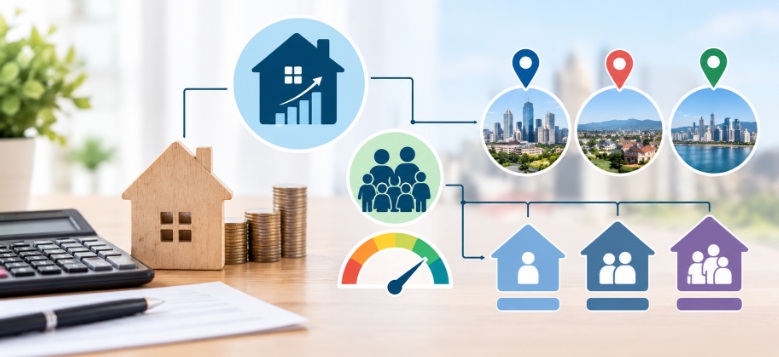
You may see the term Area Median Income, or AMI, when reading about affordable housing. AMI is a measure of household income for a certain area. Housing programs use it to set income limits for different groups.
Some apartments may be for households at a lower share of AMI, while others may allow a higher share. The limits can also change by household size. This means an income limit in one city may not be the same as one in another city.
If you are asking, “What is income restricted apartments?” AMI is one key part of the answer.
6. What Documents Will You Need?
Found an apartment that may fit your budget? Before you apply, gather your papers. Many properties ask for proof of income, identification, and information about everyone in your household. You may need recent pay stubs, tax records, benefit letters, or bank records.
The exact list can vary by property and program. It may feel like a lot, but having your documents ready can make the process easier. Ask the property manager for a full list before you apply. Then check each item twice.
Missing one document may slow down your application or require you to send more information later.
7. How to Apply for an Apartment
The application process can be simple, but it may take time. First, find a property that offers income-restricted housing. Next, ask about its income rules, rent, documents, and application process. Fill out the form carefully and give honest information.
The property may review your income and household details before making a decision. Some homes have more people applying than available units, so that a waitlist may be used. Do not give up if a home is not available right away. Keep looking at other properties and housing programs.
Affordable housing options can change as new units become available.
8. Income-Restricted vs. Regular Apartments
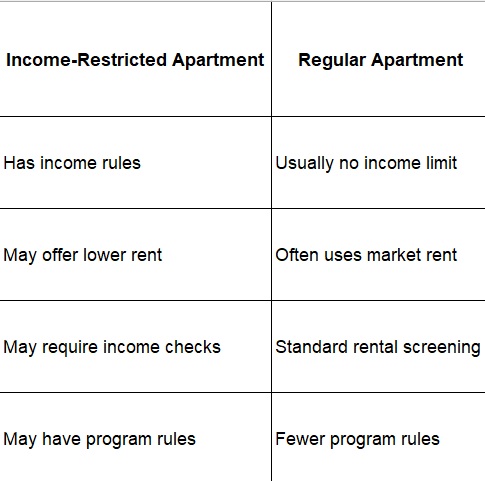
Not sure how income-restricted homes differ from regular apartments? The biggest difference is how the housing is offered and who can qualify. Regular apartments usually use market rent, which can change based on local demand.
Income-restricted apartments have income rules that applicants must meet. Some also have special rent rules. Both types of apartments can have bedrooms, kitchens, parking, and other common features. An income restriction does not automatically mean the home is poor quality.
The property still needs to meet the rules that apply to it. Always check the actual apartment instead of judging it by its label.
9. Common Myths About These Apartments
There are a few myths about income-restricted housing. One is that only people without jobs can qualify. That is not true. Many programs allow working households if their income meets the set limit. Another myth is that every income-restricted apartment is old or poorly maintained.
In reality, the condition of a home depends on the property. You may also hear that these apartments are impossible to find. Some areas have waitlists, but listings can open when units become available.
The best way to know what applies to you is to check the rules for each property instead of relying on rumors.
10. Where Can You Find These Homes?
Now that you know what income-restricted apartments mean, the next step is finding one. Start with your local housing authority or government housing website. You can also search apartment listing sites and ask property managers if they offer income-restricted units.
When you find a listing, check the income limits, rent, household rules, and application steps. Do not send money or personal documents until you know who you are dealing with. Take your time and compare the rules for different homes.
A little research can help you find an option that fits your income, household, and housing needs.
Frequently Asked Questions
How do I qualify for income-restricted housing in Florida?
You usually need to meet the program’s income limits, which can depend on your household size and location. You may also need to provide proof of income and other documents.
What is the minimum income to rent an apartment?
There is no single minimum income for every apartment. Landlords often set their own income rules, while income-restricted housing follows the limits of its specific program.
Where can I find income-restricted apartments in New York City?
You can search through NYC Housing Connect, the city’s official affordable housing portal, and check listings from local housing agencies and property managers.
What is another term for low-income housing?
Common terms include affordable housing, subsidized housing, public housing, and income-restricted housing, depending on the program.
What is another name for affordable housing?
Affordable housing may also be called income-restricted housing, below-market housing, subsidized housing, or low-income housing.
Final Thoughts
Finding a safe and affordable home can feel hard, but income-restricted apartments can give qualified renters more options. The key is to understand the income rules, household limits, and documents needed before you apply.
Take time to check local housing programs and ask questions about each property. Affordable housing is also just one part of helping people who face money or housing struggles. In South Florida, Our Father’s House Soup Kitchen supports people facing homelessness and hardship by providing hot meals, food bags, clothing, and hygiene items.
Donate To The Poor & Homeless Of South Florida
Our Father’s House Soup Kitchen has fed the poor and homeless in South Florida over 900,000 hot meals since 1993. Our tax deductible non profit organization also accepts and distributes donations such as clothing, toiletries, shoes, bicycles, and more. You can donate to help the poor and homeless through our website.

Reviewed For Factual Accuracy
Our team meticulously fact-checks all website content before publishing. Discover more about our website’s editorial standard here and the dedication we uphold.

About The Author
Meet writer Rei Bayucca, a graduate of Saint Louis University. Prepare to delve into insightful articles tailored to solve your most pressing problems. Rei has the knack for captivating you with expertly crafted content that will leave you craving more.
Correct Digital, Inc is paid by private donors to provide website digital marketing services to this non-profit organization.